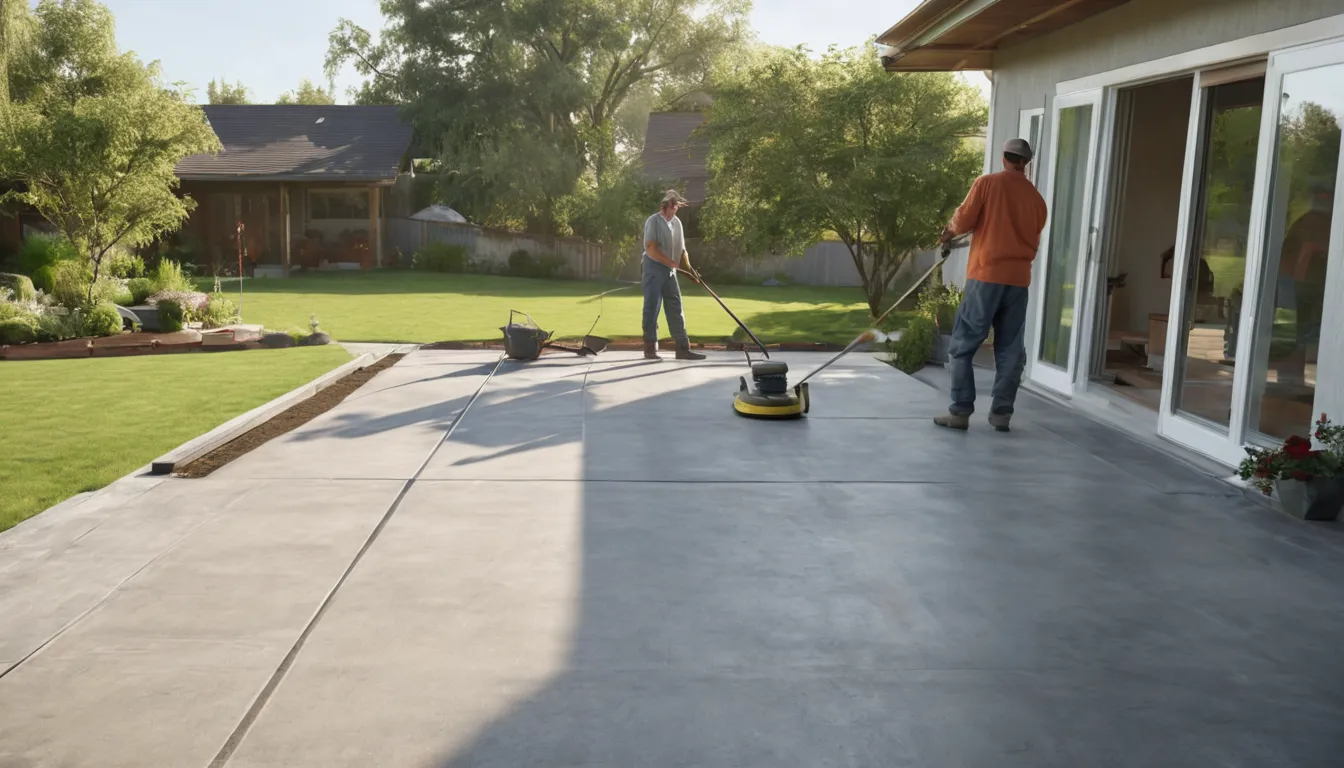
A patio looks simple from the kitchen window. It is a flat gray surface with a few chairs on it. Underneath, though, it is a layered system of soil, gravel, concrete and slope, and each layer has a job to do. Think of it like a good pair of boots: you only notice the sole when it fails.
Comfortablelegacy Concrete is a referral service. We connect homeowners in the Cahokia Heights area with independent local providers who pour patios, and the providers do the work. This page explains what a new patio involves, what it may cost, and which early signs in an old slab tell you it is time to plan a replacement.
Plan Before the Weather Plans for You
Concrete behaves a little like bread dough. It needs the right temperature to set well, and it does not like being rushed or chilled. In a region with deep winter frost and hot, humid summers, the good pouring windows are limited, so the calendar matters more than most people expect.
Providers in our network often book up when the weather turns pleasant. Asking early gives you time to compare, to think about layout, and to avoid a hurried decision.
Signs Your Yard Is Asking for a New Patio
An old patio usually gives hints before it gives up. A few are worth a slow walk around the yard:
- Cracks wide enough to catch a pencil tip
- One slab edge sitting higher than its neighbor
- Water pooling near the house after rain
- A rough, flaking or sandy surface
- A gap opening where the patio meets the wall
Why a Small Flaw Grows
Picture a water bottle left in the freezer. The water turns to ice, expands and splits the plastic. A hairline crack in a slab does the same thing each winter, only slowly. Water slips in, freezes, pushes the crack wider, and the next thaw lets in even more.
That is why small signs, small projects is a sensible rule. A patio replaced while the soil underneath is still sound is simpler than one replaced after the ground has washed out.
Request Service
Water Comes First: Drainage and Your Foundation
A good patio sheds water the way a roof does. It should slope gently away from the house, often around a quarter inch per foot, so rain moves toward the lawn instead of toward the wall. Where spring flooding is common and basements rely on sump pumps, that slope is not a detail. It is the point of the whole job.
If you already see damp basement walls or cracks in the foundation, talk with foundation repair experts before anything is poured beside the house. A new patio should not be asked to solve a problem it did not cause, and a provider can plan around that work.
Older Homes Hide Surprises
Houses built many decades ago, such as frame homes and bungalows, can hide old downspout lines, buried slabs, loose fill and earlier patches. Think of a favorite pair of jeans with several mended knees. You cannot see how many layers are there until you look closely.
A provider may probe the soil, mark old drain lines and decide how much to remove. If the driveway beside the patio also shows patches, that is a separate project, and a provider can talk through concrete driveway repair or replacement on its own terms.
What Happens Below the Surface
Most of a patio's strength sits where you cannot see it. The old surface is removed if needed, the soil is shaped and packed, and a layer of compacted gravel goes down. Concrete poured on soft ground is like a tray set on a pillow: it looks fine until someone leans on one corner.
Sizing Your Patio
Start with the furniture, not the tape measure. A small bistro set can sit on roughly ten by ten feet. A table for six usually wants twelve by sixteen or more, because chairs need about three feet to slide back. Think of it as a rug under a dining table: if the chairs fall off the edge, the rug was too small.
Leave room for a grill, a walkway to the door, and a spot for future plans. Adding on later is possible, but the seam between old and new concrete is often visible.
Thickness, Reinforcement and Joints
A typical residential patio is about four inches thick, often with wire mesh or steel bars inside. Providers also cut shallow control joints into the surface. These work like the perforations on a paper towel roll: they tell the concrete where to crack, so it does so in a neat line instead of a random one.
Finish Options
The finish changes how the patio looks, feels and ages. Common choices include:
- Broom finish: light ridges that give grip when wet
- Smooth trowel: clean looking, but can be slick in rain
- Exposed aggregate: small stones showing through for a textured look
- Colored concrete: tint mixed in or added to the surface
- Stamped patterns: concrete pressed to look like stone, brick or wood
Stamped concrete patios give the look of natural materials on a single poured slab. They do need sealing from time to time, and the pattern should suit the age and style of your house.
Request Service
Request a callback to check provider availability and ask about finishes that suit your yard.
Built for Freeze, Thaw and Storms
Good concrete flatwork in a cold climate usually uses a mix with tiny air bubbles. Those bubbles act like little expansion rooms for freezing water. A sealer then adds a thin shield against moisture and de-icing salts. Heavy summer storms and hail are hard on any outdoor surface, so ask the provider how the finish handles both.
Choosing a Concrete Provider
Providers in our network are independent businesses, so it is fair to ask questions. Useful ones include:
- Can you describe how you prepare the base?
- How will you handle slope and drainage?
- What mix and reinforcement do you use?
- Do you carry the insurance and any local permits the job requires?
- What does the written quote include?
What a Written Estimate Should Spell Out
A clear quote lists the size, thickness, finish, removal of old material, base work and sealing. It also says what happens if the crew finds something unexpected, which matters in older yards. If a line is vague, ask about it before you agree to anything.
Caring for the New Patio
Fresh concrete is like a cake cooling on the counter. It looks done before it is done. Keep foot traffic off for the time the provider suggests, and wait longer before moving heavy furniture or a grill. Concrete keeps hardening for weeks.
Go easy on de-icing salt the first winter, sweep away debris, and reseal on the schedule the provider recommends. Watch for early signs, such as a new hairline crack or a damp edge, and mention them sooner rather than later.
Read the Slab Early
A patio rewards a little attention each season. Walk it after the first thaw and after a heavy storm. Small signs, small projects: a short note about what you see now makes the next conversation with a provider easier.
Request Service
What's Included
Old Slab Removal
Providers can break out and haul away a cracked or sunken patio so the new one starts clean.
Base and Slope Prep
Soil is shaped and packed, then topped with gravel so water drains away from your home.
Forms and Pour
Frames set the shape, then concrete is placed, leveled and finished with care.
Joints and Sealing
Control joints guide cracking, and a sealer helps protect the surface from moisture.
Typical Concrete Patio Costs in the U.S.
Prices depend on size, finish, soil, access and local rates. These typical U.S. ranges are only a starting point, so ask providers for a written quote that fits your yard.
| Item | Typical range | Notes |
|---|
| Plain broom-finish patio | $6 – $12 per sq ft | Simplest option; varies with size and thickness |
| Stamped concrete patio | $12 – $25 per sq ft | Pattern and color raise the price |
| Exposed aggregate finish | $8 – $18 per sq ft | Texture depends on stone and method |
| Old slab removal and haul-off | $2 – $6 per sq ft | Thicker or reinforced slabs cost more |
| Extra grading or drainage work | $500 – $3,000 | Depends on slope and soil conditions |
| Sealing | $1 – $3 per sq ft | May need repeating every few years |
Request Service
How It Works
Share Your Plans
Tell us the size, finish and any trouble spots you notice, such as pooling water or cracks.
Get Matched Locally
Comfortablelegacy Concrete connects you with a provider in the Cahokia Heights area who handles patio work.
Review the Written Quote
The provider looks over the site and explains scope, finish and timing.
Provider Does the Work
The provider prepares the base, pours the slab and explains the care steps.
Why Call Comfortablelegacy Concrete
Explained in Plain Words
We outline what a patio involves so you can ask providers clear, confident questions.
Independent Providers
Local businesses do the work. Comfortablelegacy Concrete only helps you reach them.
Older Homes
Past patches, buried lines and aging soil are part of the conversation, not a surprise afterward.
No Obligation
Request an estimate, compare what you hear, and decide at your own pace.
Other Services